Sponsored: This article contains a sponsored link. eLiveStory has marked it as such, and the analysis below was written independently.
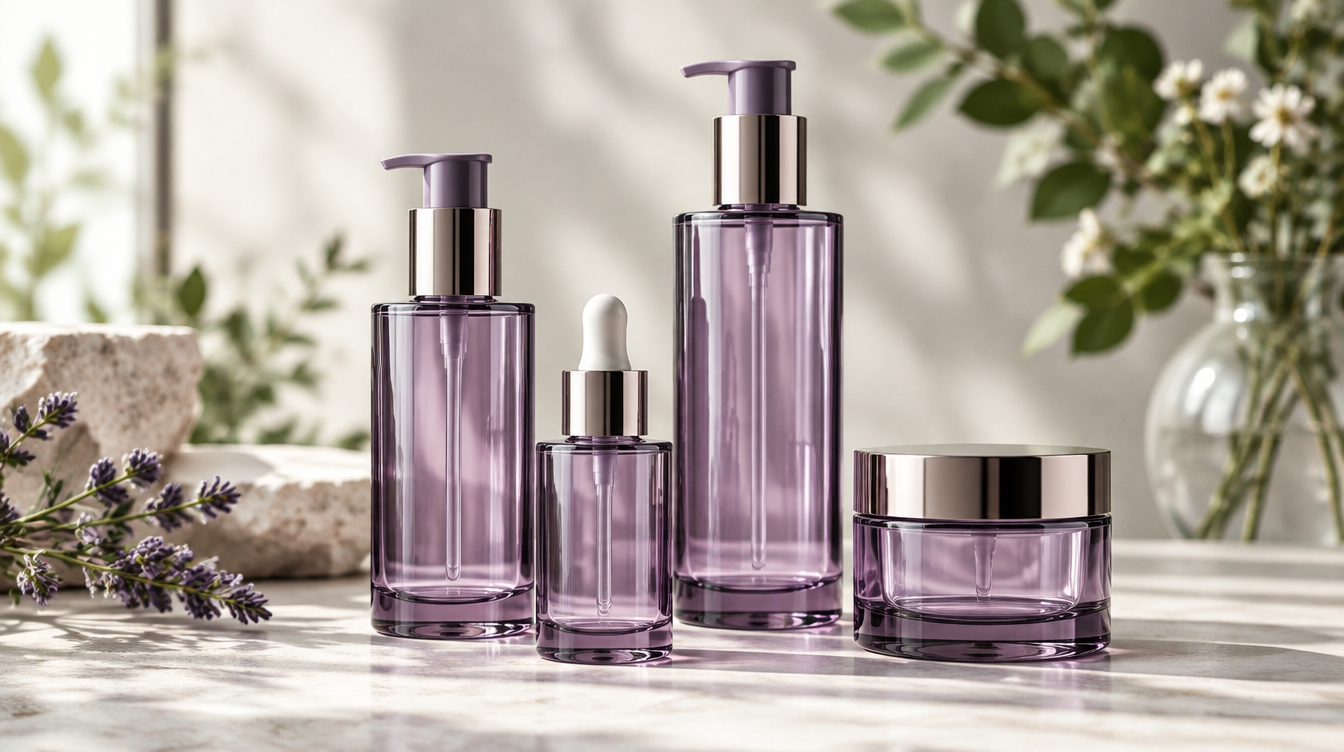
For a skincare or fragrance brand, the bottle is often the first thing a customer touches and the last thing they throw away. It carries the logo, but it also carries a promise about quality, care and values. That is why a growing number of small and mid-sized beauty labels are looking at cosmetic bottles violet glass as a way to pair a distinctive look with a product-protection story. This piece looks at what the material is, what its maker claims, and how a brand should think about the choice.
Key points
- Violet glass is marketed as a way to filter visible light that can degrade sensitive ingredients; the effect depends on the formula and packaging.
- The supplier’s own range for cosmetics runs from roughly 15 ml to 250 ml, with several neck finishes and closure types.
- Public independent evidence on shelf-life benefits is limited, so brands should test their own formulas.
- As a branding tool, the colour and weight of glass also communicate care and quality, separate from any preservation benefit.
Why packaging is a branding decision, not just a container
Research has long treated packaging as part of a brand’s identity. A study titled “Package design as a branding tool in the cosmetic industry: consumers’ perception vs. reality” is indexed on PubMed, and its premise reflects a wider view in the industry: shoppers read shape, colour and material as signals before they read an ingredient list. We were unable to open the full paper while preparing this article, so we are not quoting its findings here; readers can find it by title.
For a newer brand, that matters because packaging is one of the few brand assets a customer physically handles. It is also an area where consistency counts. Our earlier piece on why managing a brand effectively matters makes the same point about every customer touchpoint.
What violet glass is claimed to do
Miron Violetglass is a trademarked glass produced by a Dutch company. According to the supplier’s cosmetic bottle page, the bottles “reduce light exposure that can harm active ingredients over time” and are “designed to offer a superior level of protection for cosmetic formulations.” Industry explainers describe the glass as filtering much of the visible spectrum while allowing some ultraviolet and infrared light through.
It is worth separating the claim from the proof. One retailer-written explainer we reviewed said the benefit depends on “what the product is, its ingredients and its packaging,” and the only study it cited came from the glass maker itself, using chives rather than cosmetics, with no results reported. None of this shows the glass does not work. It shows that the evidence publicly available to a reader is mostly the supplier’s own, and that a brand making preservation claims to customers should be able to back them with its own stability testing.
The practical range for brands
The supplier lists six cosmetic bottle designs: Alhena, Capella, Draco, Lynx, Mira and Virgo. Its page gives examples such as 50 ml and 100 ml sizes for Alhena, 120 ml and 200 ml for Draco, and 15 ml and 30 ml for Lynx. It also lists neck finishes from 18/400 to 24/410 and closures including treatment pumps, lotion pumps, fine mist sprayers, droppers and screw caps. Samples are available on request, and decoration options include screen printing, pad printing, labelling and coatings. The page states a size range of 15 to 250 ml, while its meta description says 200 ml, so brands should confirm current specifications before ordering.
| Question for your brand | Why it matters |
|---|---|
| Is the formula light-sensitive? | Oils, vitamin C and some botanical actives may benefit most from light-filtering packaging. |
| Does the fitting suit the product? | Pump, dropper and mist choices change dosing, hygiene and the feel of use. |
| Can the look carry your story? | A violet tone is distinctive, but it must match your positioning and label design. |
| What will you claim? | Preservation claims should rest on your own test data, not supplier marketing. |
Sustainability: look past the badge
Glass is often seen as a more sustainable material than many plastics, and the supplier’s site displays ISO 9001, ISO 14001, and B Corp marks. The cosmetic bottle page itself makes no recycling or reuse claims in its text. Brands that want to use glass in their environmental story should check how bottles are collected and recycled in their own markets, and keep the language specific. We discuss the risks of vague green claims in our piece on eco badges for environmentally conscious brands.
A simple way to decide
- Start with the formula. If the product is stable in clear or amber packaging, violet glass is a design choice, not a necessity.
- Order samples. Handle the weight, test the closure, and see the colour under shop and home lighting.
- Run stability tests. Compare your formula in different bottles over time before promising longer shelf life.
- Align the message. Use packaging claims that match evidence, and keep the label design consistent with the rest of the brand.
- Confirm supply. Ask about minimum orders, lead times, and regional availability, which the supplier says vary.
Frequently asked questions
What are cosmetic bottles made of violet glass?
They are bottles made from a violet-tinted glass that is marketed as filtering visible light to help protect sensitive formulas. The best-known version is the trademarked Miron glass.
Does violet glass extend shelf life?
The supplier says the bottles help reduce light-related degradation, but it does not publish a specific shelf-life figure on its cosmetic page, and independent public evidence is limited. Results depend on the formula.
What closures work with these bottles?
The supplier lists treatment pumps, lotion pumps, fine mist sprayers, droppers and screw caps, across several neck finishes.
Is violet glass worth it for a small brand?
It can be, if your formula is light-sensitive or your positioning is premium. Order samples and run your own tests first. Our guide to skin care tips shows how consumers think about product care.
The bottom line
Packaging can tell a brand’s story and protect its product, but only the second job can be measured. Violet glass offers a distinctive look and a plausible light-protection rationale. Brands should treat the supplier’s claims as a starting point, check them against their own formulas, and be precise about what they tell customers.
Sources: Miron cosmetic bottles product page (miron.com), reviewed 4 November 2026; Amazingy, “Violet Miron Glass: Hype or Beneficial in Cosmetics?”; PubMed record for “Package design as a branding tool in the cosmetic industry: consumers’ perception vs. reality”. Company claims are attributed and have not been independently verified.
Sources and Editorial Notes
Elivestory aims to use relevant sources, separate confirmed information from speculation and update important details when reliable new information becomes available.

Sarah Jay
Sarah Jay is a journalist, fact-checker, and writer who creates well-researched articles using information from credible and trusted sources. She combines verified facts with thoughtful analysis, offering readers clear, balanced, and insightful perspectives on the topics she covers.
View All Articles