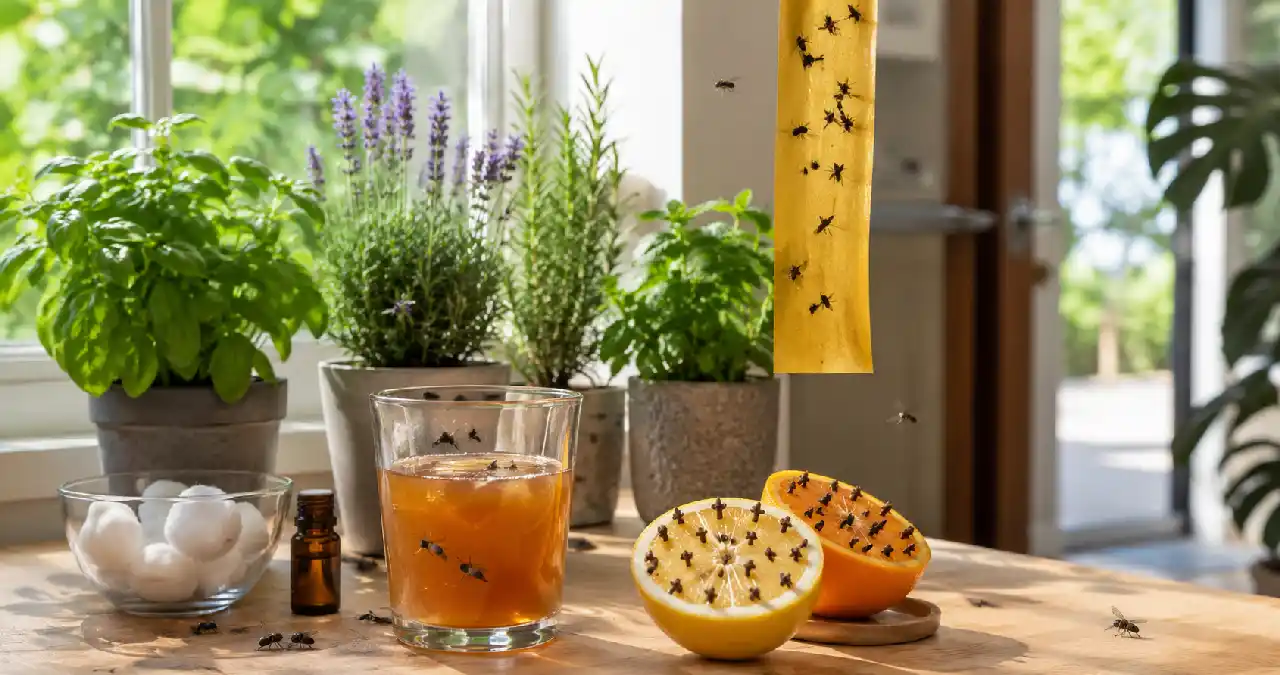
Flies buzzing around the ears while you relax (or remain busy) at home is a real nuisance! These obstinate pests are mostly seen in warm, high-humidity places, sitting on ‘dirt’ dumps and then flying here and there. My God, GERM-SPREADERS…ewwww!!
Even more, they be like: “We are not done yet; let’s breed and multiply until the maximum disgust has already set in.”
While commercial, chemical-based insecticides are the easiest go-to solution to curb flies’ audacity, you must reconsider the potentially harmful components they contain.
(Organophosphates, carbamates, organochlorines, and stuff that links both to cancer MALICE, and environmental MENACE!)
What’s the solution then?
Probably wondering about some non-toxic, homely measures to ward them off? (we just know what’s going on inside your head, mate…)
Come, learn the most naturally effective remedies for fly control below. The best part is that the tips we are gonna share now apply to any kind of annoying, unwanted flying ‘mini-guest’! So, let’s start?
Table of Contents
Fly-repelling aromatic plants
Fragrant to us, ‘damn-overwhelming’ for them!
Herbs like lavender, basil, rosemary, parsley, mint, etc., contain natural repellent properties. Consider planting them at your main entrances and windows. This can significantly reduce flies near entry points.
Essential oils
Similar to aromatic herbs, essential oils have a strong odour that blocks the flies’ sense receptors, thus keeping them off.
How to use: Mix a few drops of any essential oil of your choice, such as peppermint, lavender, eucalyptus, etc., with water. Dilute and store the mixture in a spray bottle; apply it frequently around the different entry points of your living space.
Alternative way: Soak a few cotton balls in the mixture and place them near window sills or the areas where flies gather the most.
Sweet food traps
Ah, seems bribes work here too! (Yeah, you are right..)
What you have to do is: take a few discarded plastic bottles or containers (with a perforation on their caps small enough for the flies to get inside BUT NOT COME OUT). Put some sugary appetizers like cola, sugar-mixed water, etc. into them, and you are ready. Also, add a little liquid soap to the liquid so trapped flies can’t escape
Next, keep the bottles near the windows or places where the flies mostly enter.
You can also use: Fresh ripe fruit juice, cut banana rings or diced apple pieces, wine, beer, molasses, etc.
Vinegar & dishwashing liquid mixture
Add equal parts of water and vinegar (preferably the apple cider one) in a glass. Next, put a few drops of dish soap liquid into that. Mix them well and cover the glass with a thin plastic film (followed by securing the plastic with a rubber band), having a few small holes poked into it. Simply works like magic!
How it works: The mixture attracts the flies, and they fly into the holes. Once inside, the dish soap causes them to sink.
Camphor, guggul, coconut coir, cinnamon, and incense sticks
One of the traditional home remedies to get rid of flies, the aromatic smoke from burning them contains special compounds that are unpleasant to flies. It causes them to move away from your living space.
Citrus fruits with cloves
Many people also use this as a natural deterrent for flies, as they do not like the smell of tangy fruits like lemons and oranges.
What to do: Take a citrus fruit and cut it into two. Stick a few cloves into its sliced fleshy portions, and place them in fly-prone zones of your house. The combined odour of citrus and cloves will keep the flies out.
Glue paper traps (or flypaper strips)
They are sticky paper strips that you can keep at random places throughout your house. A very effective and easy way to catch flies.
You can even make one yourself.
Cut a paper or thin cardboard sheet into small strips and coat them with a gooey substance like sugar syrup or honey. Done. No buzz, nothing!
Insectivorous plants
Opt for plants like the Venus flytrap; they naturally feed on insects and can keep your interiors fly-free. However, they are not practically beneficial in the long run for catching random insects (even the good ones) and mostly take a sufficient long time to digest each one of them. Moreover, they are high-maintenance plants and require a lot of manual care.
Regular home cleaning
Perhaps the most underrated remedy of all!
Flies and similar harmful pests grow in litter and unclean areas. So, make it a point to maintain proper hygiene both inside and outside homes.
If you have a small baby or a pet at home, dispose of soiled diapers and droppings carefully in closed bins or covered landfills where flies do not have access.
Besides, you must:
- Keep food items and water covered. Otherwise, they become a breeding ground for flies and a common germ transmission route.
- Empty litter bags regularly.
- Change water and food kept in the feeders daily.
- Never leave your dishes undone over the sink.
- Not allow cut grass or dry leaves to decay outside your premises.
- Not use rat poison, as the rotting bodies heavily attract flies.
Mechanical fly barriers
Use old mosquito net cuttings to put on entrances; this technique keeps flies off efficiently while maintaining proper air ventilation. Works for all kinds of flying insects.
In closure
Using home remedies to get rid of flies takes time, and you have to really be patient. These methods work slowly, yet consistently, and are not like the instant-spray chemical insecticides that often fail to work after using for some time. For more such eco-conscious tips and updates, stay tuned to Elivestory!
Sources and Editorial Notes
Elivestory aims to use relevant sources, separate confirmed information from speculation and update important details when reliable new information becomes available.

Sarah Jay
Sarah is a professional blogger and content writer. She loves to share her different ideas and thoughts by blogging. She is very enthusiastic about traveling and fashion.
View All Articles