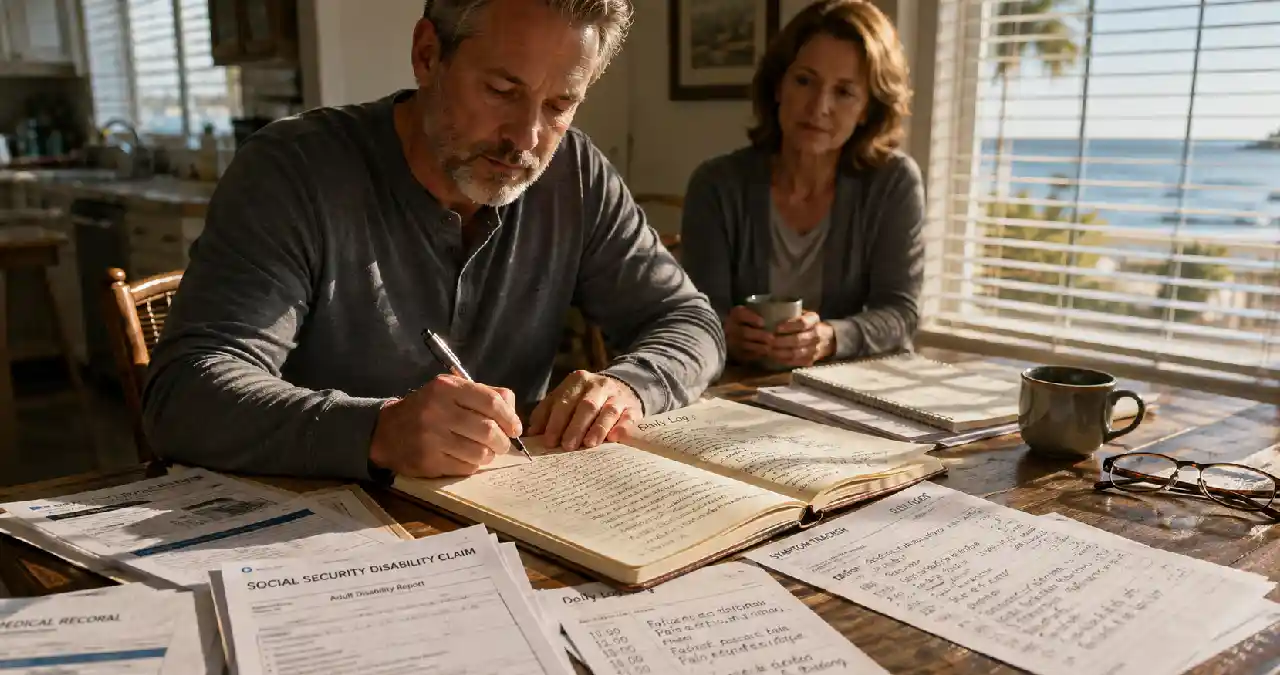
When it comes to a serious health matter, one is apt to hear people use broad terms such as being worn out or having difficulty with their mobility. Yet they can be blind to the importance of the finer points. An evaluator will put far less stock in the word “difficult” than in an account of what actually transpires when a task is attempted, down to how much time it consumes and what brings the exertion to a halt. In the end, that distinction between the vague and the precise is what makes for a credible record on paper. It is something that has to be put into practice, but once one learns to put a name to those minor details, it gives a new dimension to how a condition is perceived by someone who has no personal acquaintance with the patient.
Most people use to minimize their own struggles, sorta automatically. Like, they downplay the pain or the exhaustion as they got used to pushing through it quietly and alone. That instinct thing is barely understandable, but it can backfire when what they say ends up in a formal record. At that moment, it gets reviewed by strangers. And instead of using softened wording. choosing phrases that actually match the difficulty of a task, not just some gentler version, gives a more honest depiction of the real limits people face day to day, every single moment. And that change in wording is often the first real meaningful step toward putting together a case that truthfully reflects someone’s condition.
Table of Contents
What a Strong Personal Statement Actually Includes
According to www.injuryattorneyelite.com, based in Stuart, Florida, a Social Security disability claim relies on more than diagnosis codes and lab results, since evaluators also need a clear sense of how a condition plays out in ordinary moments. A strong personal statement describes specific situations, such as struggling to stand long enough to cook a meal or losing focus partway through a simple conversation. These concrete examples carry more weight than general descriptions because they show exactly where a condition interrupts normal functioning. Detail, not length, is what tends to make a personal statement genuinely useful during review.
Timing also matters within a personal statement, since describing how often a limitation occurs helps distinguish between an occasional bad day and a consistent, disabling pattern. Someone who explains that a symptom appears daily, or only under specific conditions, gives evaluators something concrete to weigh against medical records. Legal representatives handling a Social Security disability claim frequently guide clients toward this level of specificity rather than allowing statements to stay general. Martin County residents preparing these statements often benefit from this structured guidance before submitting their paperwork.
Learning to Speak Plainly in Stuart
Stuart has this noticeably close-knit community vibe, and a lot of residents say there’s a cultural habit of brushing off hardship, rather than just lingering on it out loud. In day-to-day life, that resilience is genuinely admirable, but it can also trip someone up when it comes to a disability claim, especially if the habit follows them into how they write about their condition on paper. Local advocates and support groups in Stuart have started pushing applicants to separate personal pride from practical truthfulness, even when it feels awkward. That difference usually takes a while for people to get used to, because it can feel uncomfortable to describe yourself as limited after years of downplaying the same struggles.
Attorneys working with Stuart residents often spend real time helping clients unlearn this habit of understatement before drafting a personal statement. There are some things a person will not put in a statement on his own, having long since made peace with the difficulty of it all. A couple of sessions to talk through matters can bring those kinds of examples to light. In my experience with Stuart’s disability applicants, once they have gone through that process, the statements they put forward are much more compelling and thorough. It is a change of perspective that can be as vital to the case as any medical file one might produce.
Family Support Shapes the Story in Krueger Creek
In Krueger Creek, families often notice little changes in a loved one’s abilities long before that person is prepared to say anything out loud. A husband or wife, or maybe an adult child, might start quietly handling tasks the applicant used to manage by themselves. Still, nobody brings it up openly; it’s more like the whole thing is happening off to the side, and everyone pretends not to see it. When these observations get shared in a truthful way, they can add real perspective to a personal statement, because relatives sometimes spot the limits more clearly than the person living inside them day to day. And bringing in a trusted family member for this type of conversation usually helps reveal small details that end up strengthening the overall narrative quite a bit.
In Krueger Creek, some households keep informal notes, or even a plain log; they jot down the hard days, the symptoms, or those small little moments when help was needed. Even when it’s written casually, that ongoing record can later turn into a solid reference when you’re trying to put together a detailed personal statement months afterward. Memory fades pretty quickly once treatment keeps going for a long stretch so these small bits are honestly more valuable than people expect during the application process. Families in Krueger Creek who do this minimal thing often say it feels more manageable to describe patterns clearly instead of leaning on memory alone.
Where Clinical Notes and Personal Words Meet
Visits to Cleveland Clinic Martin South Hospital usually have this small, quick window where a patient works through things, and then the provider turns all that into clinical shorthand. It feels like that moment right before the charting starts. When everything is still unpacked, but not fully. If the patient explains a bit more with the little nuances like they’re struggling to hold on, or they need to stop and pause fairly often while standing, then that whole story can get squeezed into a short phrase. And that phrase, it often drops some of the original context, not on purpose; it just ends up that way.
After that, there’s also the part where patients who come in with specific examples already in mind tend to communicate more clearly, even more directly, sometimes. So the provider ends up getting wording that is more likely to translate cleanly into the medical record. It’s a small warm up step, but honestly it can matter a lot for how faithfully the clinical notes reflect what’s happening day to day in real life.
Providers at facilities like this one often welcome patients who show up with written notes or specific examples, and it usually saves time. It also helps a lot to make things more accurate. Like, a patient who says their pain gets worse after about fifteen minutes of standing gives the provider something exact to put in the chart, instead of a cloudy complaint that then gets summarized loosely. That collaboration between the patient’s own phrasing and the provider’s clinical documentation, it tends to produce a fuller and more useful record over time. Applicants who treat these appointments like an opportunity to communicate clearly tend to leave with stronger supporting evidence, and honestly that’s the whole point.
Finding Confidence to Tell the Whole Story
A slow walk through Frazier Creek Park gives a lot of applicants a rare shot to think clearly about how things are- no pressure of paperwork or appointments; it’s just … well, there. Away from the forms, some folks find it easier to recall certain hurdles without the push to downplay what they’ve been handling recently. In those quiet, almost routine minutes of reflection, they end up setting down words on the stuff they missed before, when they were trying to string together their personal statement, I guess. Clarity, even if it shows up for only a little while in a calm place, can help someone tell their own story later, and it can shift things in a way that feels low-key.
In the end, a solid Social Security disability claim hinges on whether someone can describe what they can’t do, with specifics, not just easing the truth out on autopilot, or, I mean, just “going along” with it. A lawyer’s help can steer that plainness into language evaluators get, but the real willingness to be candid has to start with the applicant, not with anyone else, families included. Clinicians, attorneys, even close supports all end up having a hand in slowly coaxing out the nitty-gritty, the details that might sit unspoken. Then once the person finally sets everything down on the table, without trimming it down or polishing it smooth, the claim usually reflects what they’ve been dealing with, more or less, exactly as it is.
Sources and Editorial Notes
Elivestory aims to use relevant sources, separate confirmed information from speculation and update important details when reliable new information becomes available.

Editor
Fastlinky is the #1 agency for creative high quality link building services and we are experts in SEO and outreach services that will boost your website's performance.
View All Articles