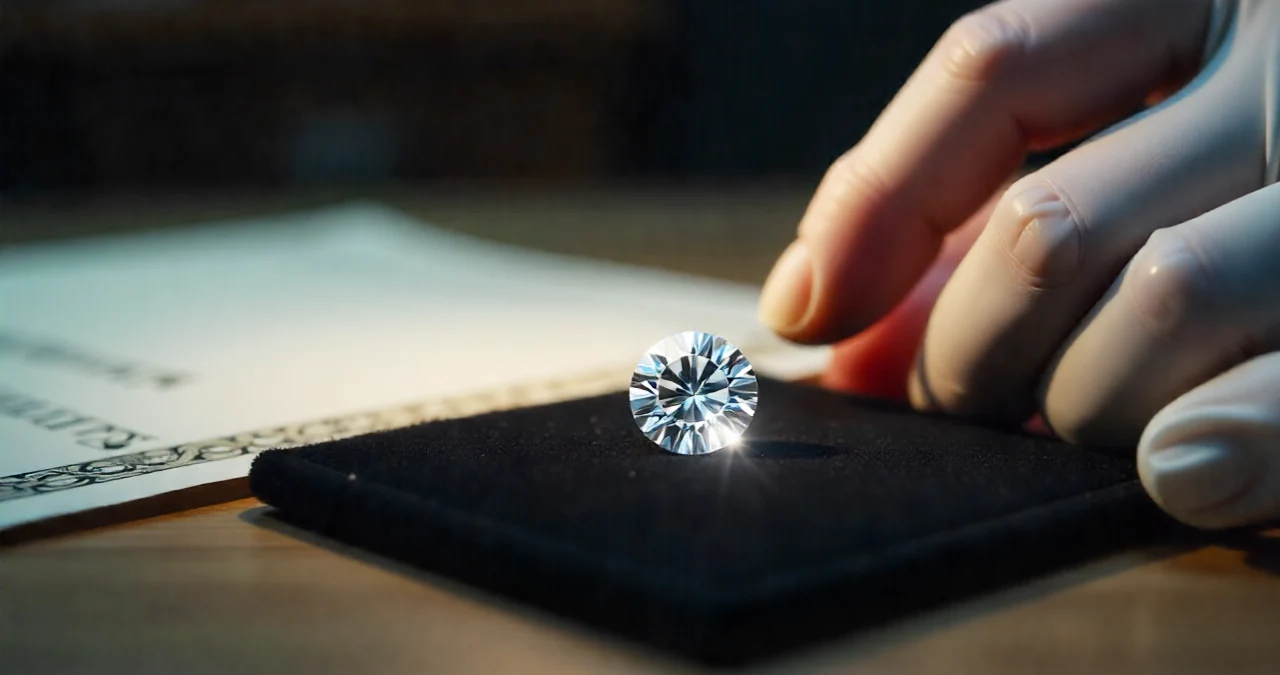
In this competitive market, there is a thing that is sold without any required certificate, which usually impacts resale value and buyer confidence. Do you want to know what that is? The thing is a diamond.
Yes, a certificate from reputable gemological labs like GIA provides essential details about a diamond’s quality. This can even help explain its price. Without certification, there is good news for new buyers or professionals, that they may propose lower prices or require their appraisals.
It’s important to work with trusted avenues, such as securing competitive offers from professional diamond buyers at Diamond Banc, to ensure a fair deal. So let’s take a look at the detailed article where we are trying to find out what the diamond certificate is, can a diamond can sell without a certificate, the pros and cons of selling a diamond without a certificate, how to sell, and whether it is worth it or not—everything will gonna discussed here.
Table of Contents
What Is a Diamond Certificate?
A diamond certificate, often called a grading report. This is an official document which provided by a recognized gemological laboratory. It represents the diamond’s features, such as cut, clarity, carat weight, and color.
If you want to understand better, I can explain the thing through an example; a GIA certificate will describe whether a diamond is colorless, has visible inclusions, or is cut to maximize brightness. It doesn’t give a dollar value. This serves as a professional evaluation of the stone’s qualities.
However, if these elements are missing in the diamond, it doesn’t mean that your diamond is worthless. It means buyers may depend on their own checks.
Can You Sell Without a Certificate?
Yes! You absolutely can. Many people sell diamonds without certificates every day. Some diamonds are older and predate widespread certification. Others may have been purchased from jewelers who didn’t provide grading reports. And sometimes, certificates just get misplaced over the years.
Here are some important tips you need to remember that while a certificate helps show trust and may higher price, it isn’t a compulsory need for selling.
What Happens When You Sell Without a Certificate?
If you are a jeweler, diamond buyer, or pawnshop and going to sell a diamond without a certificate, some facts have happened to you:
- The buyer evaluates the stone themselves.
Buyers will possibly use gemological tools, like a loupe or a microscope, to check the diamond for quality purposes. - They verify authenticity.
A professional can instantly confirm whether your diamond is genuine or artificial. - They estimate quality.
Since there’s no third-party certificate, the buyer’s expertise plays a big role in determining cut, clarity, color, and carat weight. - They make an offer.
This offer may be slightly more conservative compared to a certified stone because the buyer assumes a higher level of risk.
Pros of Selling Without a Certificate
Even though certificates are helpful, there are some advantages to selling without one:
- Saves money: Depending on the stone, a diamond licensed can cost anywhere from $50 to a few hundred dollars. If you’re selling a small or modestly valued diamond, certification might not be worth the cost.
- Faster process: You can walk into a jeweler or diamond buyer and complete the sale on the spot without waiting weeks for certification.
- Works well for smaller stones: For diamonds under 0.50 carats, buyers may not require certification at all since their resale value is typically lower.
Cons of Selling Without a Certificate
Of course, there are also some drawbacks:
- Lower offers: Without certification, buyers may undervalue your diamond to account for risk.
- Harder to compare offers: If one jeweler calls your diamond “near colorless” and another says “faint yellow,” you might not know which is accurate.
- Less buyer trust: Private buyers, such as individuals on online marketplaces, may hesitate to purchase uncertified stones.
How to Sell a Diamond Without a Certificate
If you’ve decided not to get your diamond certified, here are practical steps to take:
1. Do Your Research
Look up current diamond prices online to get a general sense of value. Diamond price calculators can give you a ballpark idea.
2. Get a Professional Appraisal
A local jeweler or independent appraiser can give you suggestions on your diamond’s qualities. This can provide you with knowledge before dealing.
3. Compare Buyers
Before accepting the offer, you need to visit multiple jewelers, pawnshops, and diamond buyers.
4. Consider Consignment
Some jewelers will sell your diamond on consignment. That means they’ll offer it in their store and pay you once it sells.
5. Be Transparent
If you know the history of the diamond, like where it was bought, share this with buyers. Clarity builds trust better than a certificate.
Selling Diamonds Without a Certificate—Is It Worth It?
Yes, that’s true, selling a diamond without certification is quite hard. But it is not impossible. Buyers are doubtful without proof of quality, so here you can apply your goodness and clarity, which are essential. Highlight features like carat, cut, and condition to build confidence.
Most people approach seasoned buyers to ensure a quick and secure transaction. Because they make competitive offers. They also treat uncertified diamonds with professionalism and honesty!
Sources and Editorial Notes
Elivestory aims to use relevant sources, separate confirmed information from speculation and update important details when reliable new information becomes available.

Editor
Fastlinky is the #1 agency for creative high quality link building services and we are experts in SEO and outreach services that will boost your website's performance.
View All Articles