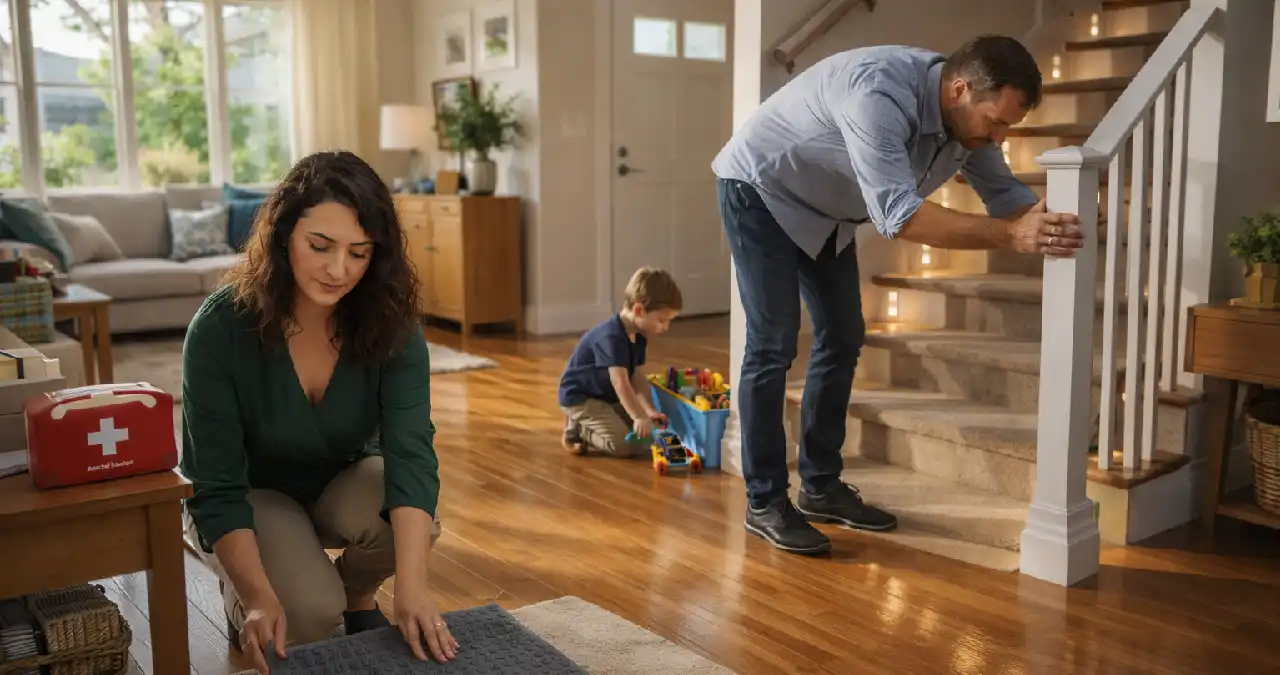
Household hazards happen unexpectedly, without giving any warning signs. Thus, families must always remain attentive. Floors, stairs, and common living rooms have the highest chances of falling into danger, especially when conditions change quickly or unexpected objects are present along the way.
One of the most common accidents is slipping over and getting hurt. While it seems minor initially, it may turn into something more major and critical – who knows?
However, with proper awareness and simple habits, it is largely possible to prevent household hazards and ensure the safety of family members while they are at home. Even if one happens, such a mindful approach can contribute to a smooth and timely recovery while reducing possible future risks.
Table of Contents
Maintaining Safety Measures in Daily Life
Small yet effective measures, such as keeping pathways clear, making proper light arrangements, etc., can reduce potential household hazards.
Moreover, family members must periodically check for minor issues in the riskier places. This prevents the smaller issues from turning into more significant ones.
Creating an awareness culture within the home also encourages children and adults alike to recognize and avoid dangers before actual incidents occur.
According to one legal practice, slip and fall incidents highlight the importance of these precautions. Here’s how:
Once the hazard takes place, families understand how long a small issue has remained unaddressed. This generates awareness in their minds, and they think of solving the problem at the earliest.
Thus, one must incorporate safety measures into their daily routine and encourage others at home to do the same. The process also creates a shared responsibility among all family members, creating an environment where attention to potential hazards becomes second nature!
How to Support Each Other After Home Accidents?
Post-accident, the quick response of family members is crucial, as it determines the recovery time length. Immediate attention to injuries and a thoughtful approach to aftercare can significantly prevent the scenario from becoming challenging.
By coordinating responsibilities and offering emotional support, families can truly hasten normal routine restoration.
Next is seeking timely medical help from a professional (in cases of major injuries). If you already have a family lawyer from before, that’s great, too! Here’s why:
The lawyer gives you valuable insights about certain accidental events that may possibly take the shape of potential legal complications. This helps to easily navigate the aftereffects without adding unnecessary mental and financial stress.
Last but not least – focusing on emotional resilience within the family is a bit extra!
Cohesive support from family helps overcome challenges easily, no matter how big they are. This sense of shared responsibility reassures the ‘self’, leading to more informed and calmer responses, while reducing future complications.
Adjusting the Home for Long-Term Safety
Long-term adjustments are more helpful than instant fixes. Identifying potentially risky areas inside the home and re-evaluating their design and layout ensures enhanced safety.
Here are some simple ways in which you can adjust your home’s long-term safety:
- Installing non-slip surfaces and supported railings.
- Reorganizing frequently used spaces and keeping floors clean.
- Relocating furniture and upgrading worn-out floor material
- Regularly checking the electrical appliances for wear and tear, including the meter box, damaged switches, etc.
- Fixing pipe leakages, loose tap fittings, etc.
- Disposing of old objects that clutter up your house.
Families who follow these adjustments often experience fewer incidents and greater peace of mind, knowing that their environment supports both safety and daily functionality.
Moreover, educating children and new family members about safety protocols is non-negotiable. This must be followed with the practice of clear communication and hands-on demonstrations so that everyone understands the importance of safety practices.
What Tools and Resources to Use?
Modern tools and resources provide valuable support to lessen household hazards. These are especially useful in places of high risk. Additionally, online resources and guides offer tips on how to maintain these tools efficiently, helping families run their routine easily.
A list of practical steps that families should take
- Performing routine checks and updates to safety equipment
- Practicing safety habits that secure the home environment.
- Upgrading to new solutions that are available in the market.
These can strike a balance between comfort and vigilance, reducing stress and providing peace of mind.
Building Resilient Family Practices
Strong family practices extend beyond physical safety and include communication, shared responsibilities, and probable risk planning. By having clear expectations for responding to incidents, families maintain stability even when accidents occur. This approach fosters confidence and ensures that all members understand their roles in maintaining a secure environment.
This focus on shared responsibility, continuous improvement, and mindful adaptation strengthens the overall environment, allowing families to maintain both safety and quality of life over time.