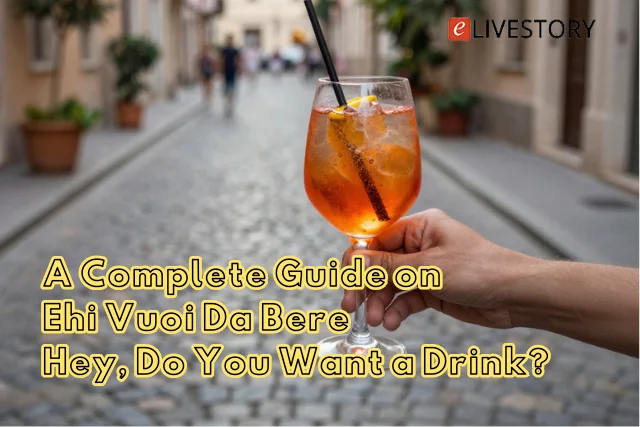
In the heart of Italian culture, there are many things that are connected to the tradition. In food traditions, every meal plays a crucial part of their own place. From morning coffee to long family dinners, eating and drinking are not just daily habits but special moments that bring people together. Italians believe that sharing food and drinks is a way to show love, respect, and friendship.
A simple glass of wine, or even a refreshing drink offered to a guest, can create a warm connection and strong bonds. This deep sense of hospitality is why small phrases and gestures matter so much in Italy. One such beautiful and friendly expression is “Ehi vuoi da bere?” — a casual question that means “Hey, do you want something to drink?” Although it seems just a question, it carries a much deeper meaning of welcome, comfort, and connection.
Let’s explore everything people want to know about Ehi vuoi da bere, its origin, the three phrase meanings, why it is used in Italian tradition, impact, what to respond, and more. Let’s show the true spirit of Italian life, where every drink is not just served, but shared with the heart.
What is Ehi Vuoi Da Bere?
“Ehi vuoi da bere” is an Italian phrase that directly means “Hey, do you want something to drink?” It’s a friendly and informal way to offer someone a drink — but in Italy, it is much more than just asking about a drink. It carries warmth, connection, and a piece of Italian culture.
This phrase is a way of embracing feeling and a warm connection that is wrapped in words. Inviting someone to join for a drink is so much more capable with each other connection, but with Ehi vuoi da bere, it is more than just a join and share drinks. It’s also about an invitation to offer someone to join, interact, relax, and leave all the life chaos behind for a while.
It’s a complicated term. It can be used to describe any kind of beverage. Whether it’s a glass of wine with friends, a cup of coffee at a cafe, or something else entirely, the act of spending time together is more important than the particular beverage.
Understanding the Phrase – “Ehi Vuoi Da Bere”
To know the entire meaning of Ehi vuoi da bere, the phrase has three parts, and people should understand them individually:
“Ehi” — in English, it means “hey”. It used to get someone’s attention in a friendly way.
“Vuoi” — in English, it means “do you want?”
“Da bere” — in English, it means “to drink” or “something to drink.”
When putting them together, it’s coming to a casual and welcoming question like — “Hey, do you want a drink?” or “Hey, do you want something to drink?”
However, in the Italian way, it is more than just serving a drink, as it is also associated with sharing moments.
When an Italian says this, they are essentially saying — “I’m welcoming you. Let’s take a moment to connect.” This reflects the larger Italian value. It is a concept about enjoying social life, slow conversation, and shared experiences.
Pronunciation — How to Say “Ehi Vuoi Da Bere”
People commonly ask, how to pronounce it? This has happened with the majority of people, of course, who want to pronounce it in the wrong way at gatherings of people. Here’s a simple way to pronounce it —
Ehi — “eh-ee”
Vuoi — “vwoi” (kind of like “voy” in English)
Da bere — “dah BEH-reh”
Put them together, and say smoothly with confidence — “eh-ee vwoi dah BEH-reh.”
Say it in a warm and friendly way, matching how Italians naturally speak.
Origin: Where Did It Come From?
The phrase has its roots in Italian social life and hospitality. Italy has a long tradition where different types of community lives with different types of traditions, like drinks, meals, etc.
When it is historically seen, family, friends, and neighbors usually gather in homes, villages, and town spaces to sit, drink, talk, and enjoy with each other. When someone offers a drink, it means they welcome you with kindness and respect, in a friendly way. “Ehi vuoi da bere” is a gesture to become a natural and social way to start these moments.
In the early 20th century, many rural places in Italy, like Tuscany, Campania, and Sicily, neighbors loved to visit each other’s houses and ask, “Ehi vuoi da bere?” They enjoy themselves by offering drinks and sharing hospitality as well as they can.
Over time, the phrase became part of everyday speech — used not only in homes but also in cafes, bars, workplaces, and public life. It’s now part of the fabric of Italian social etiquette.
Evolution of the Tradition
Originally, “Ehi vuoi da bere” started as a casual phrase among people, but later became a viral sensation. The phrase shows that what it represented was tied closely to traditional Italian gatherings by simple village life, family get-togethers, and neighbor visits. Today, the practice still exists, but it has transformed in modern settings. The reason behind its popularity is also quite much connected with social media, which plays a crucial role in encouraging its spread to the community.
✓ In cities, it’s frequently heard in bars and cafes where friends meet for coffee, an aperitivo, or evening drinks.
✓ Italian aperitivo culture (pre-dinner drinks with snacks) makes this phrase especially common between about 6–9 PM.
✓ Social events, dinner parties, and the workplace also communicate with the phrase.
Despite these changes, the core meaning hasn’t faded. It still invites people to relax, share time, enjoy, and grow relationships.
Why “Ehi vuoi da bere” Matters in Italian Tradition
Ehi vuoi da bere matters because it represents key parts of Italian culture. It’s not just about a glass of drink or fulfilling thirst, it’s about:
✓ Hospitality and warmth — In Italy, offering drinks is a way to express a warm welcome and kindness. It’s almost automatic when someone enters your home or joins your table.
✓ Social Connection — Italy values face-to-face interaction. Sharing drinks creates space for conversation, laughter, and connection.
✓ Slowing Down for Life — Instead of rushing, Italians enjoy moments with others — even if just over a simple espresso or glass of water.
✓ Cultural Identity — This phrase, and how it’s used, reflects the Italian idea that life is richer when shared. It’s a cultural attitude — not just a phrase.
Why the Phrase Is Used in Italian Culture
Italians use this phrase because it is:
- Friendly and casual — perfect for social settings.
- Welcoming — it makes people feel included.
- Open-ended — it doesn’t specify a drink, so it can fit any time of day or situation.
Where you’ll hear “ehi vuoi da bere.”
You’re likely to hear this phrase in many social settings in Italy. Here are some common places where you hear about Ehi vuoi da bere:
- At someone’s home when guests arrive.
- In cafes and bars, among friends or with someone else.
- During aperitivo hour with groups curving down after work.
- At parties or gatherings before meals start.
- Workplace breaks
- It’s everywhere people gather to sit, talk, and enjoy a drink together.
Popular Italian Drinks You Might Be Offered
When someone asks “Ehi Vuoi Da Bere?”, they could be offering any of the following drinks, depending on the setting and time:
- Morning & Daytime – Espresso, Cappuccino, Water
- Afternoon & Pre-Dinner – Aperol Spritz, Negroni, or Campari Soda
- Dinner & Evening – Red or white wine, Digestivi
- Non-Alcoholic Options – Soda or juice
The drink itself depends on the time of day and the company, but the offer is always about sharing a moment.
What to respond to “ehi vuoi da bere”
When you hear Ehi vuoi da bere, from your family, friend, neighbor, or someone special, you must respond in your own way. Here are some good responses in simple Italian:
“Sì, grazie!” — Yes, thank you!
“Volentieri!” — Gladly!
“No, grazie.” — No, thank you.
“Cosa hai?” — What do you have?
Another important matter that many people need to know. If you decline but want to be polite, you can say “sto bene” (I’m fine) or “magari più tardi” (maybe later).
Impact of ehi vuoi da bere in modern Italian culture
“Ehi, vuoi da bere?” is still a popular custom in Italy as the country enters the 21st century. But as time has gone on, its purpose has just changed. Although this tradition is frequently observed at cafes, bars, and restaurants in today’s hectic environment, its basic message is still the same. No matter how hectic the situation may be, this is an opportunity to build relationships at a relaxed pace and enjoy life.
“Ehi, vuoi da bere?” Offering a drink has grown into a custom that inspires people to stop, be in the moment, and enjoy each other’s company in a world that is becoming more and more divided.
Final Wrap
“Ehi vuoi da bere?” is a simple Italian phrase with a rich culture. While it literally asks if someone wants something to drink, it really offers something deeper — friendship, warmth, hospitality, and a chance to connect. Whether in homes, bars, cafes, or even online, this phrase reflects Italy’s love for shared moments and human connection. Remembering how and when to use it gives you a small key to understanding Italian life and bringing people together.
It’s more than just a question and invites people with hearts and full of emotions. Whether it is used in virtual conversations or in memes created about everyday situations, its meaning is the same and polite.
FAQs
Is Ehi vuoi da bere only used for alcoholic drinks?
No. It includes all beverages — coffee, water, wine, soft drinks, etc., whether you are having a party, a family get-together, or soft drinks with someone special.
Why is it important in Italian culture?
Ehi vuoi da bere is important in Italian culture because it reflects hospitality, friendliness, and the importance of social connections.
Where will I hear it most often?
In homes, bars, cafes, and at social events, when people are relaxing and talking, Ehi vuoi da bere automatically comes.