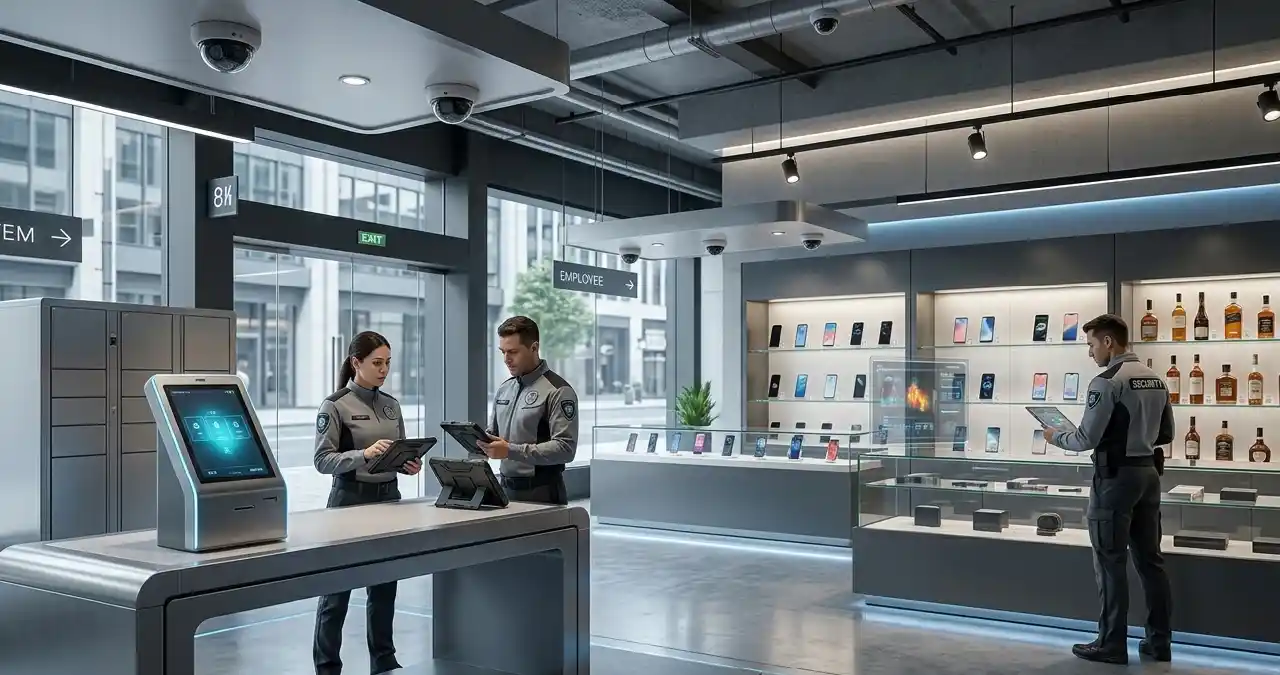
It’s no secret that organised retail crime has been on the rise over the past few years. It’s estimated that the overall costs are reaching around £4 billion a year, when you consider both the costs of theft and of crime prevention measures like CCTV and security guards.
In the context of these emerging threats, it’s important that retailers take a strategic approach to security solutions. From surveillance to data analysis, here’s what you should be investing in.
Table of Contents
Surveillance
More and more retailers are implementing in-store surveillance systems to prevent and prosecute in-store theft.
Cameras can be effective (some stores are even using facial recognition software), but security guards also play an important role.
If people know that a guard is likely watching them, either from a camera display screen at the front of the store or in person, they’re a lot less likely to think that they can get away with theft.
Access control
It’s also important that you can keep tags on and control who has access to various areas in your premises.
You’ll need to invest in some kind of smart key locker from a supplier like Traka, which allows you to control who has access to specific keys but also access data on who accessed a key or specific area at any point in time.
Employee training
Your employees will be one of the most important aspects of your security system, and they need to be properly trained.
They need to be trained on company policy, and to feel safe in the event that they need to confront someone.
Failure to take care of this aspect can result in faster employee turnover rates and systems that, although technically installed, aren’t used properly.
Tracking tags
More and more businesses are using increasingly affordable RFID tags to protect any number of assets in retail contexts.
From bottles of olive oil to mobile phones, these tags are incredibly affordable and make it possible to create an automated alert system in the event that an item is taken.
You can use different tags for items of different values as well, so that the theft of a £10 item doesn’t result in the same response as the attempted theft of a £800 product.
Data analysis
It’s also important to collect as much data as possible on the specific kinds of security vulnerabilities you’re facing.
In a shop that could consist of tracking which items are stolen at the highest rate, and then relocating those items to a location that’s easier to watch or placing security tags on the items themselves.
While undoubtedly an increasingly prominent issue, there are thankfully now more solutions available to retailers than ever before to deal with these problematic trends.
It’s important to research what’s actually available for your business, and then choose solutions that are specifically designed to cater to your most damaging issues. Continue to tweak these systems, to make sure that they remain as effective as possible.
Sources and Editorial Notes
Elivestory aims to use relevant sources, separate confirmed information from speculation and update important details when reliable new information becomes available.

Editor
Fastlinky is the #1 agency for creative high quality link building services and we are experts in SEO and outreach services that will boost your website's performance.
View All Articles